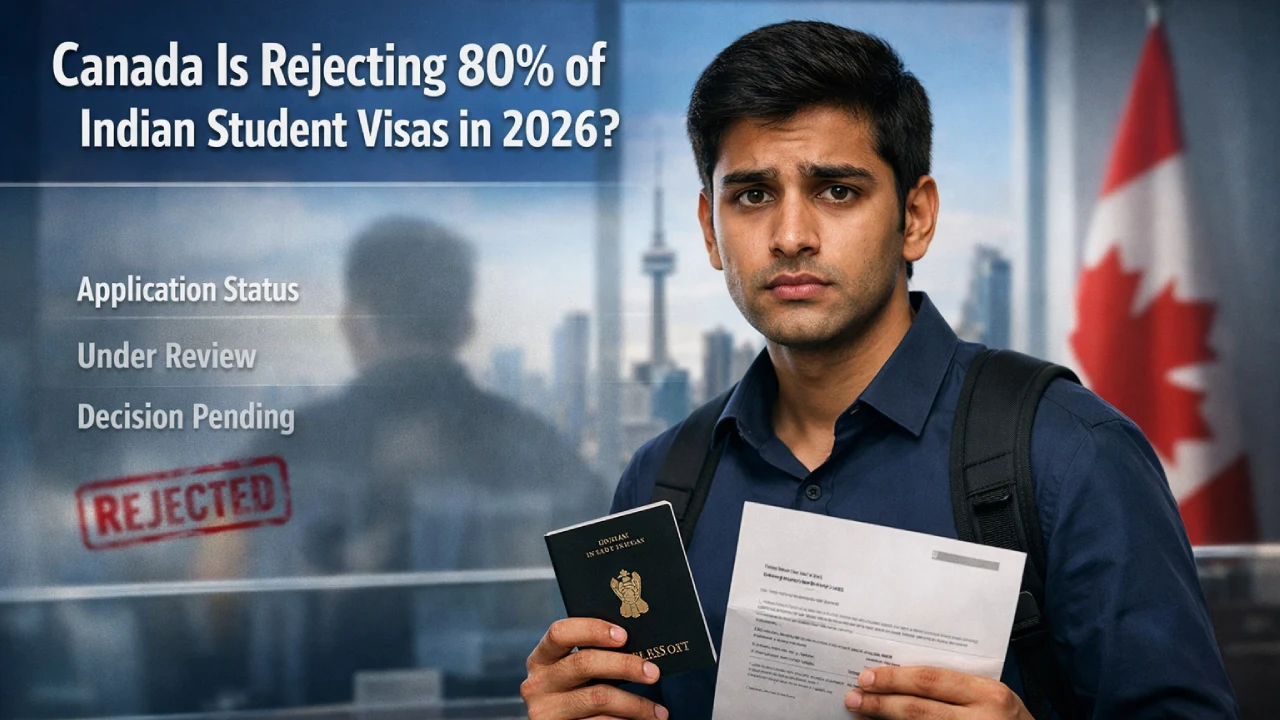
Indian students prefer to study in Canada because of its high educational standards and post-study job opportunities and its routes to obtaining permanent residency. The current data shows a complete shift from past trends because reports show that between 2025 and 2026 around 80 percent of Indian student visa applications received rejection which marked the highest refusal rate in several years.
The shift has created confusion among many aspirants while simultaneously creating their concerns. The explanation of current events in Canada shows that the country has denied a large number of student visa applications from India throughout 2026.
Understanding the “80% Rejection” Claim
Indian applicants face an increase in refusal rates which data from Immigration Refugees and Citizenship Canada IRCC shows to reach a refusal rate of 80 percent according to multiple sources. Canada has not completely shut its borders but the country has implemented a new policy which will control visa approvals for Indian student applications.
Key Reasons Behind High Rejection Rates
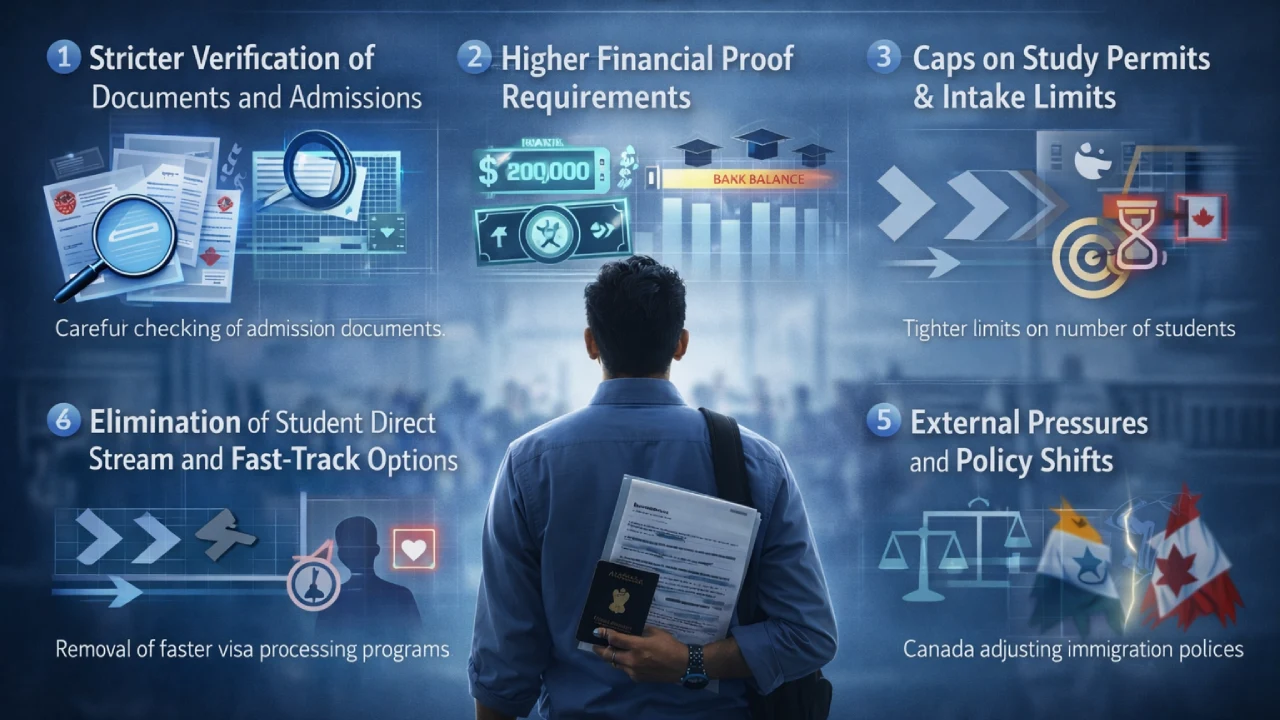
1. Stricter Verification of Documents and Admissions
Canada has increased its requirements for studying in the country through study permit applications. Visa officers are now more carefully verifying –
● Letters of acceptance from Canadian institutions
● Proof of genuine funds
● Academic plans and course relevance
This comes after past years saw a rise in fraudulent offer letters and inconsistent documentation.
2. Higher Financial Proof Requirements
Applicants must now demonstrate their financial capacity through stronger financial proofs. The requirements for minimum proof-of-funds have increased which makes it impossible for many families to reach the required financial threshold.
Applicants must demonstrate their sufficient funds which cover tuition and living expenses and all dependant costs. Visa officers need this proof because they will not process applications without it.
3. Caps on Study Permits & Intake Limits
Canada will start limiting study permits for 2026 to approximately 408000 permits which represents a decrease from previous annual limits. This has created tougher competition for limited slots especially for undergraduate and diploma applicants.
4. Elimination of Student Direct Stream and Fast-Track Options
The Student Direct Stream (SDS) which provided applicants with quick access to their application processing has been discontinued. All applicants will need to complete standard processing without SDS which takes more time to finish.
5. Stronger Focus on Genuine Intent
Visa officers need to confirm that applicants have their primary purpose of visiting Canada for educational studies instead of migrating to the country. The study plans require specific details which ensure that applicants demonstrate their intent to study abroad through established academic pathways. Many applications get rejected because of these specific reasons.
6. External Pressures and Policy Shifts
Domestic political changes together with resource limitations such as housing shortages and public demands for managing international student enrollment which supports local needs have all affected policy development. Canadian authorities have established temporary resident limits which include student restrictions based on economic and societal justifications.
7. Diplomatic Tensions (Indirect Factor)
The existing diplomatic issues between Canada and India which started with the Canada–India diplomatic dispute in 2023 have led to more intensive visa verification processes and extended delays in visa processing. The governmental policy which prohibits specific immigration procedures has not been mentioned as an official immigration rule but geopolitical conflicts between nations create higher security procedures for immigration operations.
Impact on Indian Students and Universities
The high rejection rate has multiple effects –
● Many aspirants are forced to reconsider alternate destinations such as Germany, UK, Australia, or Ireland.
● Delays and rejections create emotional and financial hardships for students and their families.
● Canadian universities face declining admissions especially at smaller colleges which relied on Indian student enrollment.
What Can Applicants Do in 2026?
If you want to apply for a study permit to Canada –
● Select educational programs which demonstrate clear academic advancement paths and professional benefits.
● The applicant must submit all necessary documents which include proof of funds and acceptance letters and IELTS scores.
● The applicant needs to create an effective Statement of Purpose which details their academic objectives and plans to return to their home country after their studies.
● Complete Degree Programs Which Provide Higher Approval Rates (e.g., specific Master’s degrees or research programs which have less restriction from intake
limits).
Conclusion
Canada has implemented stricter procedures for evaluating Indian student visa applications because the country now rejects 80 percent of these visas according to claims from 2026. The situation appears discouraging but shows applicants must now develop their preparation methods through more strategic and comprehensive efforts than they ever needed before. Students who provide correct documentation and develop specific study plans and maintain current knowledge about immigration regulations can succeed in their educational goals for Canada even though competition has increased.
You May Like Our Previous Blog:Apply US B1/B2 Tourist Visa from India in 2026